The 10% Brain Myth Has Been Repeated in Classrooms for Decades — But Modern Neuroscience Proves We Use Nearly All of It
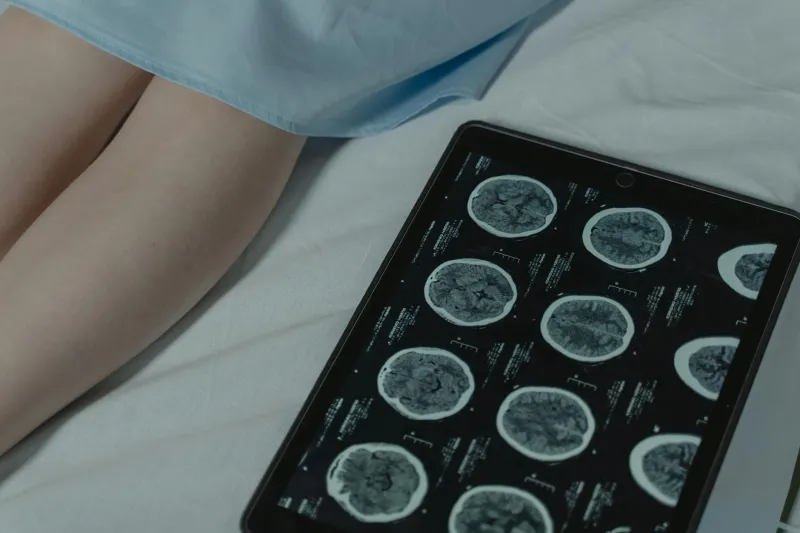
Walk into any motivational seminar, flip through a self-help book, or watch a sci-fi thriller, and you'll likely encounter one of the most enduring myths about human potential: we only use 10% of our brains. The implication is tantalizing — imagine what we could accomplish if we could tap into that unused 90%.
It's a compelling story that's been told so often it feels like established fact. Teachers have shared it in classrooms, speakers have built entire careers around it, and Hollywood has turned it into blockbuster entertainment. But according to modern neuroscience, this widely believed "fact" is almost entirely wrong.
What Brain Imaging Actually Shows
Advanced brain imaging technology has given scientists an unprecedented look inside the human brain, and what they've found contradicts the 10% rule completely. Using techniques like functional magnetic resonance imaging (fMRI) and positron emission tomography (PET) scans, researchers can now observe brain activity in real time.
The results are clear: virtually every region of the brain shows activity, even during simple tasks. When you're reading this sentence, multiple areas are working simultaneously — regions processing visual information, others handling language comprehension, and still others managing attention and memory. Even during sleep, large portions of the brain remain active, consolidating memories and maintaining essential functions.
Dr. Barry Gordon, a neurologist at Johns Hopkins School of Medicine, puts it bluntly: "We use virtually every part of the brain, and most of the brain is active almost all the time."
The Appealing Origins of a Persistent Myth
So where did this 10% idea come from? The truth is, no single source can be pinpointed, but several threads likely contributed to its widespread acceptance.
One popular theory traces the myth back to William James, the pioneering American psychologist. In the early 1900s, James suggested that people only achieve a fraction of their full potential — but he never specified 10%, and he wasn't talking about brain usage in the literal sense. Over time, his philosophical observation about human achievement may have morphed into a supposed neurological fact.
Early neurosurgery also played a role. In the 1930s, neurosurgeon Wilder Penfield discovered that stimulating certain areas of the brain during surgery didn't produce obvious responses. These "silent" areas were misinterpreted by some as unused space, when in reality they perform complex functions that aren't immediately observable through basic stimulation.
Why the Myth Became Irresistible
The 10% brain myth persisted because it offered something irresistible: hope. In a world where people constantly seek self-improvement, the idea that we have vast untapped potential sitting dormant in our skulls is incredibly appealing. It suggests that extraordinary abilities are just waiting to be unlocked.
This appeal made the myth perfect for motivational speakers, self-help authors, and anyone selling the promise of human enhancement. The message was simple and empowering: you're capable of so much more than you realize.
Hollywood embraced the concept enthusiastically. Movies like "Lucy" and "Limitless" built entire plots around characters who somehow access their brain's "unused" capacity, gaining superhuman intelligence and abilities. These films reinforced the myth in popular culture, making it seem even more credible to general audiences.
The Real Story Is Actually More Impressive
While the 10% myth is false, the actual workings of the human brain are far more remarkable than any fictional enhancement. The brain contains approximately 86 billion neurons, each forming thousands of connections with other neurons. This creates a network of staggering complexity — more intricate than any computer system ever built.
What's truly amazing is how efficiently this biological supercomputer operates. Despite using only about 20% of the body's energy, the brain manages everything from basic survival functions to creative thinking, emotional processing, and abstract reasoning. It's simultaneously running multiple programs, processing sensory input, storing and retrieving memories, and maintaining consciousness — all without conscious effort.
The brain also demonstrates remarkable plasticity throughout life. While we don't have 90% of unused brain matter waiting to be activated, we do have the ability to form new neural connections, strengthen existing pathways, and even grow new neurons in certain regions. This neuroplasticity is the real mechanism behind learning, skill development, and recovery from brain injuries.
Why Accuracy Matters
Beyond simple curiosity, understanding how the brain actually works has practical implications. The 10% myth can lead people to waste time and money on products or programs claiming to "unlock" unused brain potential. More importantly, it can cause people to underestimate the brain's current remarkable capabilities.
Recognizing that we already use virtually all of our brain shifts the focus from finding some magical "off switch" to optimizing what we have. Real cognitive enhancement comes from proven strategies: regular exercise, quality sleep, challenging mental activities, social engagement, and lifelong learning.
The Takeaway
The next time someone mentions the 10% brain rule, you'll know the real story. This persistent myth emerged from misunderstood research and wishful thinking, then spread because it offered an appealing vision of human potential. But modern neuroscience reveals something even more impressive: our brains are already operating as incredibly sophisticated, highly active networks that accomplish extraordinary things every single day.
The truth is, you're already using virtually all of your brain — and that's far more amazing than any myth about untapped potential.