One Doctor Cracked His Knuckles on Only One Hand for 60 Years to Prove a Point — and He Was Right
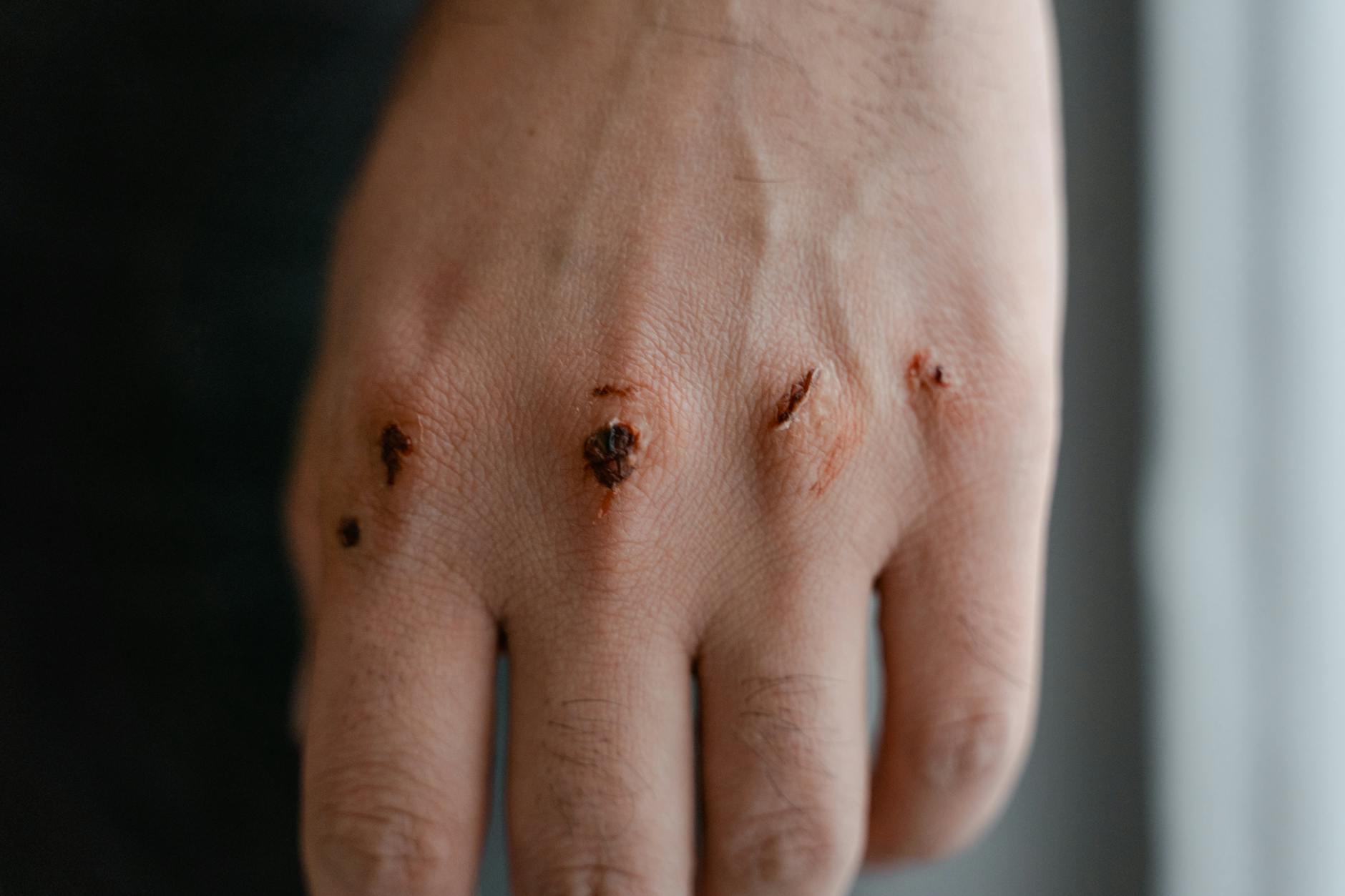
One Doctor Cracked His Knuckles on Only One Hand for 60 Years to Prove a Point — and He Was Right
If you grew up cracking your knuckles, there's a reasonable chance an adult in your life told you to stop. The warning was probably delivered with complete confidence: "You're going to get arthritis." No hesitation, no footnotes. Just parental certainty, passed down from one generation to the next like a family heirloom.
The only problem is that it isn't true. And the scientific case against this particular piece of household wisdom is, at this point, remarkably well-established — including one of the more unusual research projects in the history of medicine, carried out by a California doctor who spent six decades cracking the knuckles on only one of his hands so he'd have something to compare.
What's Actually Happening When Your Knuckles Pop
Before getting to the arthritis question, it's worth understanding what's actually producing that sound, because the answer is more interesting than most people expect.
Your finger joints are surrounded by a fluid-filled capsule called the synovial joint. That fluid — synovial fluid — contains dissolved gases, including carbon dioxide, nitrogen, and oxygen. When you pull or bend a finger joint in a way that stretches the capsule, the pressure inside the joint drops rapidly. That pressure drop causes the dissolved gases to come out of solution and form a bubble. The pop you hear is that bubble either forming or collapsing.
For years, scientists debated exactly which event caused the sound — bubble formation or bubble collapse. A 2015 study using real-time MRI imaging finally captured the moment of knuckle cracking on video and concluded that the sound corresponds to the rapid formation of the gas cavity, not its collapse. It's a small distinction, but it settled a debate that had been going on since the 1970s.
After the crack, it takes roughly 20 minutes for the gases to dissolve back into the joint fluid — which is why you can't immediately crack the same knuckle twice. Nothing is being damaged. Nothing is being displaced. It's just gas physics.
The 60-Year Experiment
Now for the story that deserves more attention than it usually gets.
Dr. Donald Unger, a physician in California, was apparently so tired of being told by his mother and aunts that knuckle cracking would give him arthritis that he decided to run a controlled experiment — on himself. For approximately 60 years, he cracked the knuckles on his left hand at least twice a day while leaving his right hand alone as a control.
At the end of those six decades, he examined both hands. No arthritis in either one. The results were published in Arthritis & Rheumatism in 1998, and Dr. Unger received an Ig Nobel Prize in Medicine in 2009 — the award given for research that first makes people laugh, then makes them think. In his acceptance speech, he reportedly suggested that his findings should prompt his mother to reconsider at least one of the things she had told him.
It's an anecdote, yes, and a sample size of one. But it's also a beautifully committed piece of scientific stubbornness, and it aligns with the broader research.
What the Larger Studies Found
Dr. Unger's self-experiment wasn't the only investigation into this question. Researchers have looked at the knuckle-cracking habits of larger populations and consistently found no meaningful association with arthritis.
A study published in the journal Annals of the Rheumatic Diseases examined the hand X-rays of habitual knuckle crackers versus non-crackers and found no difference in rates of osteoarthritis. Other studies have replicated similar findings across different age groups and demographics.
There is one small caveat worth mentioning: some research has suggested that very long-term, habitual knuckle cracking might be associated with minor hand swelling or a slight reduction in grip strength over decades. The evidence on this is limited and inconsistent, but it's worth noting that "no arthritis" doesn't necessarily mean "zero consequences under any circumstances." Still, the specific claim — that cracking your knuckles causes arthritis — is not supported by the evidence.
So Why Does the Warning Keep Getting Passed Down?
This is where the story gets genuinely interesting, because the persistence of this myth has almost nothing to do with science and everything to do with how household knowledge actually works.
For one thing, the warning sounds plausible. Joints, cracking sounds, repeated stress — it feels like the kind of thing that would cause damage over time. Our intuitions about the body often follow a simple logic: if something sounds like something breaking, maybe it's breaking. That intuition is wrong in this case, but it's not an unreasonable starting point.
There's also the fact that arthritis is genuinely common, particularly as people age. If someone cracked their knuckles throughout childhood and adolescence and then developed arthritis in their 50s or 60s, the two events can feel connected even when they aren't. That's the post hoc fallacy — assuming that because one thing followed another, the first thing caused the second.
And perhaps most importantly: parents don't need peer-reviewed evidence to pass something along. They need to have heard it from someone they trusted. Once a warning gets embedded in the informal curriculum of parenting — alongside "don't swim right after eating" and "put on a coat or you'll catch a cold" — it tends to circulate indefinitely, independent of whether the underlying claim was ever verified.
What This Says About How Health Folklore Travels
Knuckle cracking is a low-stakes example, but it illustrates something worth paying attention to. A lot of the health advice that feels most certain — the stuff we learned before we were old enough to question it — was never based on clinical evidence. It was based on someone's gut feeling, or a misremembered article, or a plausible-sounding explanation that got repeated until it felt like fact.
The knuckle-cracking myth isn't harmful. Kids who stopped cracking their knuckles because of the warning didn't suffer for it. But the confidence with which the warning was delivered — and the way it persisted for generations without anyone stopping to check — is a useful reminder that authority and accuracy aren't the same thing.
The Short Version
Cracking your knuckles does not cause arthritis. The popping sound is gas bubbles in your joint fluid, not your bones grinding together. Decades of research have found no link to long-term joint damage. And one very determined doctor spent sixty years proving the point on his own hands.
You can relax. Your knuckles are fine.