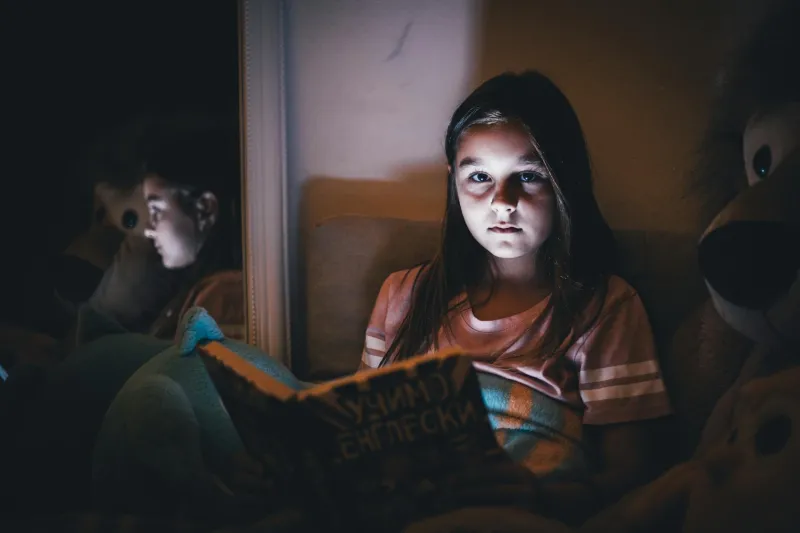
The Flashlight Under the Covers Warning
Every bookish kid knows the scenario: you're reading past bedtime with a flashlight under the blankets when a parent discovers your literary rebellion. "You'll ruin your eyes!" comes the immediate warning, followed by confiscation of both book and light source. This scene has played out in American bedrooms for generations, backed by the firm parental belief that reading in dim light causes permanent vision damage.
But here's what's fascinating about this widespread concern — eye doctors have never found evidence that it's true.
What Ophthalmologists Actually Find
Since the early 20th century, vision researchers have periodically investigated whether poor lighting conditions cause lasting eye damage. Study after study has reached the same conclusion: reading in dim light might cause temporary discomfort, but it doesn't harm the structural integrity of your eyes or cause permanent vision problems.
The American Academy of Ophthalmology has stated repeatedly that reading in low light is like exercising with weights that are too heavy — it might tire you out, but it won't cause injury. Your eyes are remarkably adaptable organs that can function across an enormous range of lighting conditions without sustaining damage.
Modern eye research using advanced imaging technology has confirmed these earlier findings. Scientists can now observe the retina, lens, and other eye structures in real-time during various lighting conditions, and they see no evidence of cellular damage or structural changes from reading in poor light.
The Real Story Behind Eye Strain
So why does reading in dim light feel so uncomfortable if it's not actually harmful? The answer lies in understanding what eye strain really is versus what people think it is.
When you read in poor lighting, several things happen that create discomfort. Your pupils dilate to let in more light, which reduces depth of field and makes focusing more difficult. Your eye muscles work harder to maintain clear vision, leading to fatigue. You might blink less frequently while concentrating, causing dry eyes.
These symptoms — headaches, tired eyes, difficulty focusing — feel significant enough that it's natural to assume something harmful is happening. But eye strain is more like muscle fatigue after a workout than actual tissue damage. Rest your eyes, and the discomfort disappears completely.
How a Comfort Issue Became a Medical Warning
The transformation of temporary eye strain into permanent vision damage warnings likely happened through several cultural channels. Early 20th century health advice often emphasized preventing any physical discomfort as a way to avoid long-term problems, even when the connection wasn't scientifically established.
Parents observed that children reading in poor light complained of headaches and tired eyes, so the logical assumption was that continued exposure might cause lasting harm. This seemed especially plausible during an era when people had less understanding of how vision actually works at the cellular level.
The advent of electric lighting also created new anxieties about "proper" illumination. As households transitioned from candles and gas lamps to electric bulbs, there was cultural uncertainty about how much light was necessary for various activities. Erring on the side of caution meant establishing bright lighting as the safe standard.
Why the Myth Persists in the Digital Age
Despite decades of ophthalmological research debunking the dim light damage claim, the belief remains strong among American parents. Part of this persistence comes from the fact that the advice feels protective and costs nothing to follow.
The rise of digital devices has actually reinforced these concerns rather than dispelling them. Parents worried about screen time and blue light exposure find it easy to extend their concerns to all forms of reading in suboptimal conditions. The dim light warning gets bundled with other vision-related anxieties.
Social media and parenting websites often perpetuate the myth by sharing articles that mix legitimate eye care advice with outdated warnings. When reputable-seeming sources repeat the dim light claim alongside accurate information about eye health, it gains credibility through association.
What Actually Threatens Children's Vision
While reading in dim light isn't dangerous, there are genuine vision concerns that deserve parental attention. Myopia (nearsightedness) rates have increased dramatically among American children, likely due to increased near-work activities and reduced outdoor time.
Uncorrected vision problems can significantly impact a child's academic performance and quality of life. Regular eye exams are far more important for protecting children's vision than monitoring their reading light levels.
Eye injuries from sports, chemicals, or UV exposure pose real risks that preventive measures can address. Teaching children about eye safety in these contexts provides actual protection rather than addressing imaginary threats.
The Comfort vs. Damage Distinction
Understanding the difference between eye comfort and eye damage helps put the dim light myth in perspective. Good lighting makes reading more pleasant and efficient, but poor lighting doesn't cause medical harm.
This distinction matters because it allows families to make practical decisions without unnecessary anxiety. If a child wants to read with a small book light, there's no medical reason to prohibit it — though providing better lighting will make the experience more comfortable.
The same principle applies to other vision-related concerns. Sitting too close to the television, reading in a moving car, or focusing on detailed work for long periods might cause temporary discomfort but won't permanently damage healthy eyes.
Separating Folklore from Eye Care
The next time you catch someone reading in dim light, remember that you're witnessing a harmless activity that's been unnecessarily vilified for generations. The warning about vision damage came from reasonable concerns about eye comfort, but it evolved into medical folklore that doesn't match scientific evidence.
Good lighting remains worthwhile for making reading more enjoyable and reducing eye fatigue. But the fear that poor lighting causes permanent vision problems is one parental worry that can safely be retired. Sometimes protecting our children means understanding which traditional warnings are based on real risks and which ones are just habits passed down through generations of well-meaning adults.