Dim Light Won't Damage Your Eyes — So How Did a Harmless Habit Become a Household Medical Warning?
Dim Light Won't Damage Your Eyes — So How Did a Harmless Habit Become a Household Medical Warning?
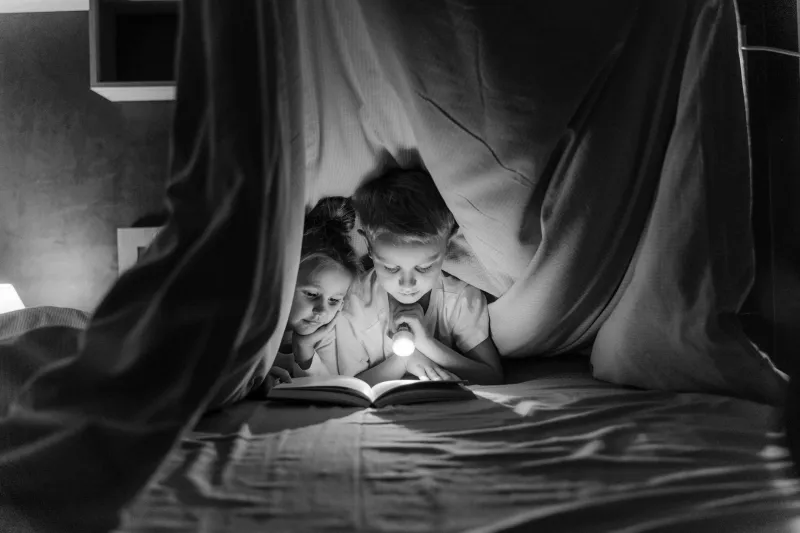
If you grew up in an American household, there's a good chance someone — a parent, a grandparent, a teacher — caught you reading in bad light and issued the warning with complete authority: stop that, you'll ruin your eyes. It wasn't delivered as a guess. It was delivered as fact, the kind passed down through families like a recipe or a last name.
The problem is that ophthalmologists — the actual medical specialists who spend their careers studying eyes — have been pretty consistent on this point for decades. Reading in dim light does not cause permanent eye damage. It never did.
So where did the warning come from, why did it spread so effectively, and what is actually happening to your eyes when you squint over a book in a poorly lit room?
What Dim Light Actually Does
When you try to read in low light, your eyes have to work harder. Your pupils dilate to let in more light, your ciliary muscles — the ones that control the lens — strain to maintain focus, and the whole system has to work overtime to process an image that it isn't really getting enough information to process comfortably.
The result is eye strain. Technically called asthenopia, it's that familiar tired, achy, sometimes slightly blurry feeling you get after pushing your eyes past their comfort zone. You might experience mild headaches, temporary blurred vision, or a burning sensation. It's real and it's unpleasant.
But here's the crucial distinction: it goes away. Rest your eyes for a bit and the symptoms resolve completely. No structural damage occurs to the retina, the lens, or any other part of the eye. The American Academy of Ophthalmology has stated clearly that dim light reading causes no lasting harm. It's uncomfortable — not dangerous.
How Discomfort Got Mistaken for Damage
This is where the story gets interesting. Eye strain is a convincing liar.
When your eyes ache and your vision blurs after reading in dim light, it feels like something is going wrong in a serious way. The discomfort is immediate and hard to ignore. For a parent watching a child squint over a book, the intuitive response is protective alarm. Something that hurts must be causing harm. Something that strains a body part must be wearing it out.
That intuition is wrong in this case, but it's not an unreasonable instinct. We apply it correctly in other contexts — overusing a joint really can damage it, for example. The problem is that eyes don't wear out from exertion the way muscles and cartilage do. Strain and damage are not the same thing when it comes to vision.
The warning also got a boost from an era when eye health was less well understood and medical authority was less accessible to ordinary families. Before the mid-20th century, most Americans didn't have easy access to ophthalmologists or reliable health information. Practical caution filled the gap. "Don't strain your eyes" evolved into "you'll ruin your eyes," and the more dramatic version was the one that got remembered and repeated.
The Role of Parental Authority in Health Myths
There's a particular category of health myth that thrives specifically because it comes from a trusted source with protective intentions. Parental health warnings occupy a uniquely durable cultural space.
When a parent says something is dangerous, it carries the weight of lived experience, love, and authority all at once. Children don't typically ask for citations. They absorb the warning and, years later, pass it along to their own children with the same conviction. The chain of transmission doesn't require the original claim to be accurate — it just requires each link to trust the one before it.
Dim light reading is a perfect example. The warning sounds specific enough to seem scientific. It addresses a real, observable experience (eye strain). And it comes from people who genuinely want to protect you. None of those things require it to be true.
Does Anything Actually Damage Eyesight?
It's worth noting what does affect long-term vision, since the dim-light myth can distract from real risk factors.
Myopia — nearsightedness — has been rising sharply in the United States and globally, particularly among children and young adults. Research increasingly points to a lack of time spent outdoors as a contributing factor, with natural light exposure appearing to play a protective role in healthy eye development. Excessive close-up work (screens, books, phones) over long periods may also contribute to myopia progression in children who are already predisposed to it.
UV exposure without protection is a genuine concern for long-term eye health, linked to cataracts and macular degeneration over time. Staring directly at the sun or at welding equipment without protection can cause real, immediate retinal damage.
None of these real risks involve reading under a dim lamp. The actual threats to your vision are quite different from the ones that made it into the household rulebook.
The Takeaway
Reading in low light is uncomfortable. It will give you a headache if you push it long enough. It's genuinely not the most pleasant way to spend an evening with a book. But your eyes will recover completely once you stop — no lasting harm done.
The warning that it would "ruin your eyes" was never based on medical evidence. It was based on a reasonable but incorrect inference: that strain equals damage. Understanding that distinction doesn't mean ignoring eye health. It means directing your attention toward the things that actually matter — like getting your kids outside more and scheduling regular eye exams — rather than policing the reading lamp.