Science Has Repeatedly Cleared Sugar of Causing Hyperactivity in Kids — So Why Do Parents Still Swear By It?
Science Has Repeatedly Cleared Sugar of Causing Hyperactivity in Kids — So Why Do Parents Still Swear By It?
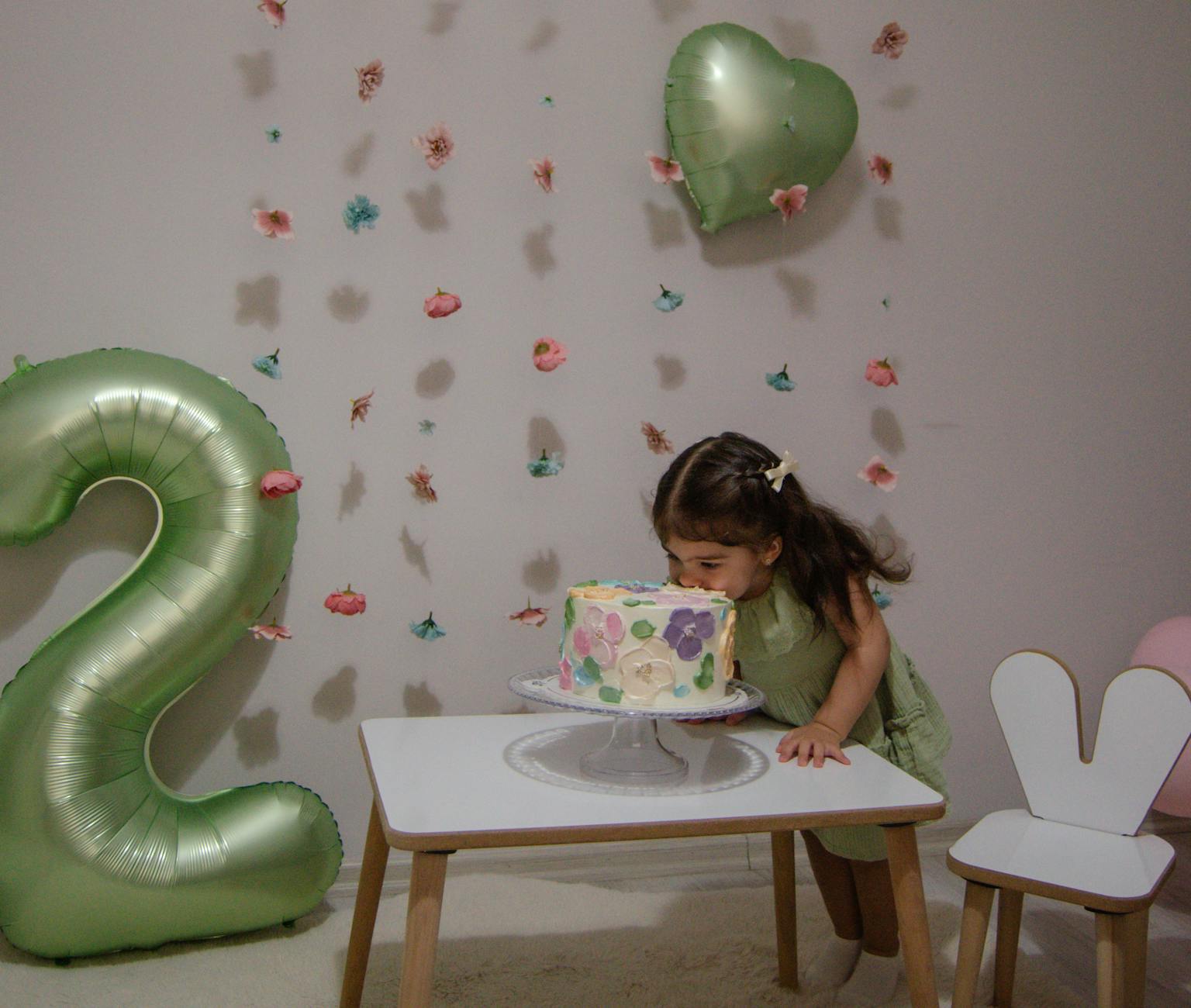
Birthday parties. Halloween night. The dessert table at a family reunion. These are the moments when American parents brace for impact, convinced that the frosted cupcakes and candy corn are about to transform their children into tiny, unstoppable chaos machines.
It's one of the most widely shared beliefs in parenting culture — and it is, according to a substantial body of research, not true.
Sugar does not cause hyperactivity in children. That sentence tends to land with a thud when parents hear it, because it contradicts something that feels almost viscerally obvious to anyone who has ever watched a group of six-year-olds tear through a birthday party. But the research on this question is about as settled as it gets in nutrition science, and the real explanation for the myth is genuinely more interesting than the myth itself.
What the Research Actually Found
Scientists have been studying the supposed sugar-hyperactivity connection since at least the 1970s, and the results have been strikingly consistent.
One of the most rigorous examinations came in 1995, when Dr. Mark Wolraich and a team of researchers published a meta-analysis in the Journal of the American Medical Association. They reviewed 23 controlled trials — studies that actually controlled what children ate and measured behavioral outcomes — and found no evidence that sugar affected children's behavior or cognitive performance, even in kids who had been identified as sensitive to sugar or who had been diagnosed with ADHD.
That was nearly 30 years ago. Studies since then have continued to reach the same conclusion. Researchers have tested sugar against placebos in double-blind designs, meaning neither the parents nor the children knew who had consumed sugar and who hadn't. The behavioral differences? Essentially nonexistent.
So if the science is this clear, why does the belief remain so stubbornly alive?
The Real Culprit: Your Brain's Expectation Engine
The answer lies in a well-documented psychological phenomenon called expectation bias — sometimes referred to as the observer-expectancy effect. In plain terms, it means that when we expect to see something, we're significantly more likely to perceive it, even when it isn't actually there.
A landmark study published in 1994 by Dr. Daniel Hoover and Dr. Richard Milich put this directly to the test. They told one group of mothers that their sons had just consumed a large amount of sugar. They told another group that their sons had received a sugar-free drink. In reality, all of the children had been given the sugar-free drink.
The mothers who believed their children had consumed sugar rated their sons as significantly more hyperactive during observation — even though nothing about the children's actual behavior was different from the other group. The expectation alone was enough to change what the mothers saw.
This is not a flaw unique to parents. It's a fundamental feature of human perception. We are pattern-seeking creatures, and we find the patterns we're looking for. When a child starts bouncing off the walls at a birthday party, the bowl of candy on the table is the most obvious explanation — so that's where attention goes. The fact that the child has also been in a loud, exciting, socially stimulating environment with a dozen screaming friends for two hours barely registers as a competing variable.
How the Myth Got Started and Why It Stuck
The sugar-hyperactivity connection began gaining traction in the 1970s, partly through the work of Dr. Benjamin Feingold, a pediatric allergist who proposed that food additives and certain natural compounds — including sugar — contributed to hyperactivity and learning problems in children. His dietary recommendations became popular with parents who felt mainstream medicine wasn't taking their concerns seriously.
The theory gave parents a concrete, actionable explanation for challenging behavior. It felt empowering. And once that belief embedded itself into parenting culture, it became self-reinforcing. Parents warned other parents. Teachers noted it. Grandparents repeated it. The idea moved through generations not because of evidence but because it matched what people already felt they were witnessing.
There's also something worth noting about the context in which sugar is typically consumed. Birthday parties, Halloween, holiday gatherings — these events are inherently stimulating, exciting, and disruptive to normal routines. Kids are often overstimulated, sleep-deprived, or simply keyed up from the social environment. Attributing their energy to the candy rather than the circumstances around the candy is an understandable but misleading leap.
What This Tells Us About How We Observe
The sugar-hyperactivity myth is a genuinely useful case study in how personal observation can feel more convincing than data, even when the data is robust and consistent. Parents are watching their own children in real time, with real emotional investment. That experience feels undeniable. A clinical trial conducted by strangers on children you've never met feels abstract by comparison.
But that's exactly why controlled studies exist — to remove the noise of expectation and circumstance and look at what's actually happening. And what they've found, over and over, is that sugar isn't doing what millions of parents are convinced it's doing.
The Takeaway
None of this means sugar is a health food, or that parents should stop thinking about what their kids eat. There are plenty of legitimate reasons to limit added sugar in children's diets — dental health, nutrition quality, long-term metabolic effects. Those conversations are worth having.
But the next time a child goes wild at a party, the cupcakes probably aren't to blame. More likely, it's the balloons, the friends, the music, and the sheer joy of being a kid at a celebration. That explanation is less satisfying than a simple cause-and-effect story — but it happens to be the real one.