Americans Eat Breakfast, Lunch and Dinner Because Factory Whistles Told Them To
Ask any American why we eat three meals a day, and you'll likely hear something about metabolism, blood sugar, or nutritional balance. It just makes sense, right? Our bodies need regular fuel throughout the day, so we've naturally evolved this perfectly spaced eating pattern.
Except that's not how it happened at all.
Before the Clock Ruled the Kitchen
For most of human history, people ate when food was available and when they felt hungry. Medieval Europeans typically ate two meals: a light morning meal and a larger afternoon feast. Many cultures around the world followed similar patterns, with eating times varying based on seasons, available food, and daily activities rather than rigid schedules.
Even in colonial America, meal timing was fluid. Farmers ate when farm work allowed. Craftsmen snacked throughout their workday. The idea of synchronized, society-wide eating times would have seemed bizarre to someone living in 1750.
The Factory Whistle Changes Everything
The Industrial Revolution didn't just change how Americans worked — it fundamentally altered when and how they ate. As people moved from farms to factories, their eating patterns had to conform to industrial schedules rather than natural hunger cues.
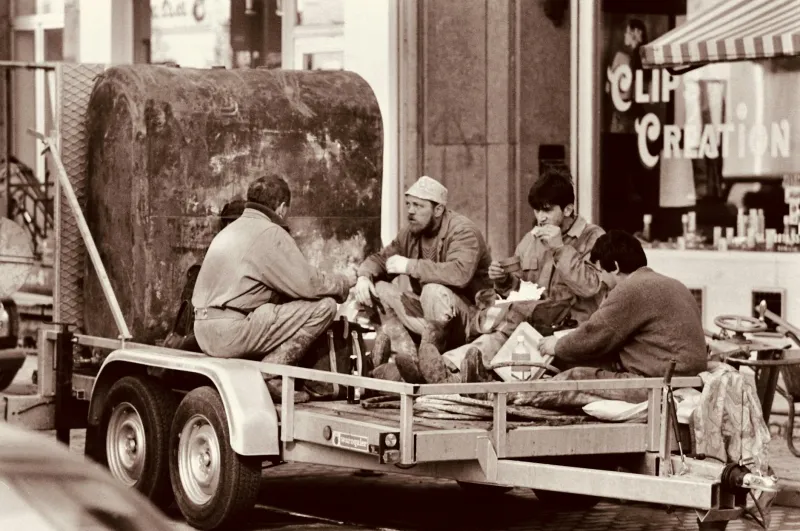
 Photo: Industrial Revolution, via 64.media.tumblr.com
Factory owners needed workers present and productive during specific hours. This created a logistical problem: when should workers eat? The solution was to designate specific break times that wouldn't disrupt production. Morning, midday, and evening meals emerged not from nutritional science, but from manufacturing efficiency.
By the 1890s, factory whistles across America were blowing at the same times each day, training entire communities to expect food at predetermined intervals. The three-meal structure became so embedded in industrial culture that it started to feel biologically inevitable.
Breakfast Becomes 'The Most Important Meal'
The morning meal got special attention during this transformation. Factory workers needed energy for long shifts, so employers began promoting hearty breakfasts as essential for productivity. This wasn't medical advice — it was workforce management.
Food companies quickly capitalized on this new eating schedule. Cereal manufacturers like Kellogg's didn't just sell breakfast foods; they sold the entire concept of breakfast as a daily necessity. Their marketing campaigns convinced Americans that skipping the morning meal was dangerous, unpatriotic, and certainly unproductive.
School Bells Cement the Pattern
Public education systems reinforced industrial eating schedules by organizing school days around the same three-meal structure. Children learned to expect lunch at noon and dinner in the evening, regardless of their actual hunger levels. Generations of kids grew up believing this timing was natural rather than institutional.
School nutrition programs further embedded the pattern. Free lunch programs, while addressing real hunger issues, also normalized the idea that everyone should eat at the same time each day. The schedule became so standard that eating outside these windows started to seem unhealthy or weird.
What Modern Nutrition Actually Says
Here's where it gets interesting: contemporary nutrition research doesn't strongly support the three-meal model. Some studies suggest smaller, more frequent meals might be better for blood sugar control. Others indicate that meal timing matters less than total daily nutrition. A growing body of research explores intermittent fasting, which directly contradicts the "regular meals" philosophy.
Many cultures that never industrialized maintain different eating patterns without apparent health consequences. Mediterranean societies often eat their largest meal in the afternoon. Some Asian cultures emphasize frequent small portions throughout the day. These populations don't seem to suffer from missing the American breakfast-lunch-dinner structure.
The Snack Food Industry Doubles Down
As Americans became locked into three-meal thinking, food companies identified a new opportunity: snacks to bridge the gaps between "proper" meals. The same industrial logic that created regimented meal times also created the need for scheduled snacking.
Snack marketing often emphasizes the supposed dangers of going too long between meals — "Don't let yourself get too hungry!" — despite little evidence that healthy adults can't comfortably go four to six hours between eating occasions.
Breaking Free from the Whistle
Understanding the industrial origins of three-meal eating doesn't mean the pattern is wrong, but it does reveal that our current system isn't biologically inevitable. Some people genuinely feel better eating three scheduled meals. Others prefer grazing throughout the day. Still others thrive on two larger meals or intermittent fasting approaches.
The key insight is recognizing that meal timing is largely cultural rather than biological. What feels "natural" to Americans in 2024 would have seemed rigid and artificial to humans throughout most of history.
The Real Story Check
The next time someone tells you that three meals a day is the healthiest approach because it's "natural," remember that factory whistles, not evolution, created this pattern. Our great-great-grandparents ate when they were hungry and food was available — a approach that might actually be more aligned with human biology than our current clock-driven system.
The breakfast-lunch-dinner structure works for many people, but it's worth remembering it emerged from industrial convenience rather than nutritional wisdom. Your body doesn't actually know what time it is.