Your Body Doesn't Know You Went on Vacation — But Supplement Companies Are Counting on You Thinking It Does
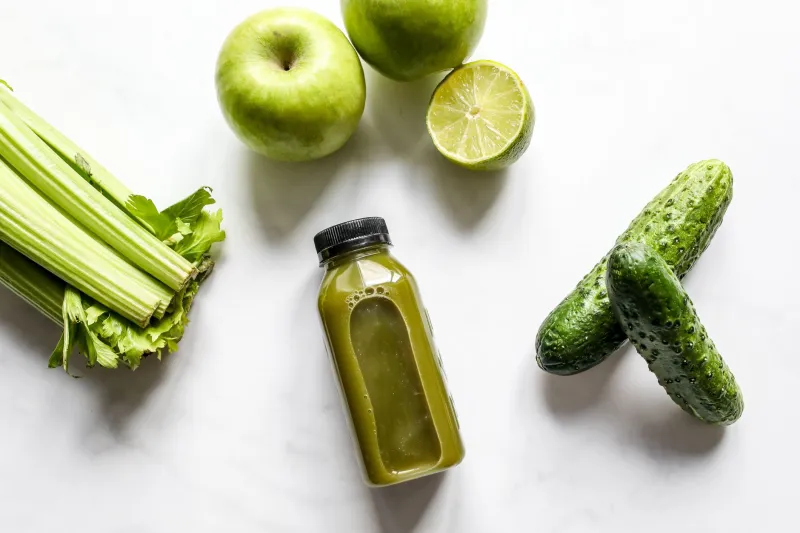
You get home from a long weekend in New Orleans, or you survive Thanksgiving at your in-laws' house, and somewhere in your social feed there's an ad for a three-day cleanse. Or a detox tea. Or a juice reset. The language is consistent across all of them: your body has accumulated things it needs to get rid of, and it needs your help doing it.
 Photo: New Orleans, via www.weareteachers.com
It's a compelling story. It maps neatly onto how guilty you already feel about the beignets and the second plate of stuffing. And it offers a solution that feels proportional to the perceived offense: you overloaded your system, so now you flush it out and start fresh.
The only part that doesn't hold up is the biology.
What 'Detox' Actually Means in Medicine
In clinical settings, detoxification is a real and serious process. It refers to medically supervised treatment for people experiencing withdrawal from alcohol or drugs, or for patients who have ingested actual poisons. It involves close monitoring, sometimes medication, and in severe cases, intensive care.
That word — detox — got borrowed by the wellness industry sometime in the 1990s and early 2000s and gradually stripped of its medical specificity. By the time it appeared on the label of a $14 tea at a health food store, it had come to mean something much vaguer: a general sense of clearing out whatever you'd put in.
The problem is that the word implies your body has accumulated something that requires active removal. And for a healthy person who just ate too much on a cruise ship, that's simply not what's happening.
Your Liver Didn't Take the Week Off
The liver is one of the most metabolically active organs in the body. It processes nutrients absorbed from the digestive tract, filters blood, metabolizes medications and alcohol, produces bile for digestion, and neutralizes or prepares waste products for excretion. It does this continuously — not in response to a cleanse, not on a schedule you set, and not in proportion to how virtuous your diet has been.
The kidneys operate similarly. They filter roughly 200 quarts of blood per day, removing waste products and excess substances through urine. They don't accumulate a backlog during a vacation that requires extra help to clear.
When gastroenterologists and hepatologists are asked about post-holiday detox protocols, the answer is consistent: there is no peer-reviewed evidence that any commercially available cleanse, juice protocol, or supplement meaningfully enhances the liver's filtration capacity or speeds up waste removal in a healthy individual. The organs doing the actual work don't have an "overdrive" mode that a $60 kit unlocks.
How the Language Migrated Into Everyday Life
The wellness industry didn't invent the concept of bodily purification from scratch — it borrowed from a much older tradition. Ideas about the body accumulating harmful substances and needing periodic cleansing appear in ancient Greek medicine, medieval European health practices, and various folk traditions around the world. The 19th century saw a surge of "autointoxication" theories, which held that waste material in the colon was slowly poisoning people from the inside. These theories drove enormous markets for laxatives, enemas, and various purging treatments.
Modern medicine eventually disproved autointoxication as a general concept, but the cultural anxiety it represented — the idea that the body is always slightly contaminated and needs help cleaning itself — never fully disappeared. The supplement and wellness industries of the late 20th century gave it new vocabulary and new products.
Juice cleanses emerged in the 1990s partly through celebrity culture and partly through the growing natural foods market. The marketing was sophisticated: it used the language of science ("toxins," "cellular cleansing," "digestive reset") without the burden of proving any of it in clinical trials. Products sold as supplements in the U.S. are not required to demonstrate efficacy before reaching store shelves, which gave the detox category enormous room to grow.
What Actually Happens After a Period of Overindulgence
If you spend a week eating more than usual, drinking more alcohol than usual, sleeping inconsistently, and moving less than usual, you will probably feel worse than you normally do. That's real. Excess sodium causes water retention and bloating. Alcohol disrupts sleep quality and affects mood. Eating more refined carbohydrates than your body needs spikes blood sugar and can leave you feeling sluggish. These effects are genuine.
But they resolve through normal behavior — returning to your regular eating patterns, getting adequate sleep, rehydrating, and moving around. No specialized product accelerates that process in any documented way. Your body's systems are already running the recovery protocol. You don't need to buy the upgrade.
Some detox products, particularly those with aggressive laxative effects, can actually create problems: electrolyte imbalances, dehydration, and disruption of the gut microbiome. The feeling of being "lighter" after a cleanse is often literal water loss rather than anything meaningful happening at the metabolic level.
The Takeaway
Feeling like you want a reset after a period of excess is a completely normal psychological response. The desire to reestablish routine, eat lighter, drink more water, and get back to the gym is healthy and sensible. None of that requires a product.
The issue isn't wanting to feel better. The issue is a billion-dollar industry that took that very human impulse and attached a pseudoscientific story to it — one that implies your body is in crisis and needs external intervention to function properly.
Your liver processed everything you ate in Cancún. It didn't wait for the cleanse tea to get started.