Sitting Up Straight Was Never the Posture Cure It Was Sold As — Spine Researchers Have Known This for a While
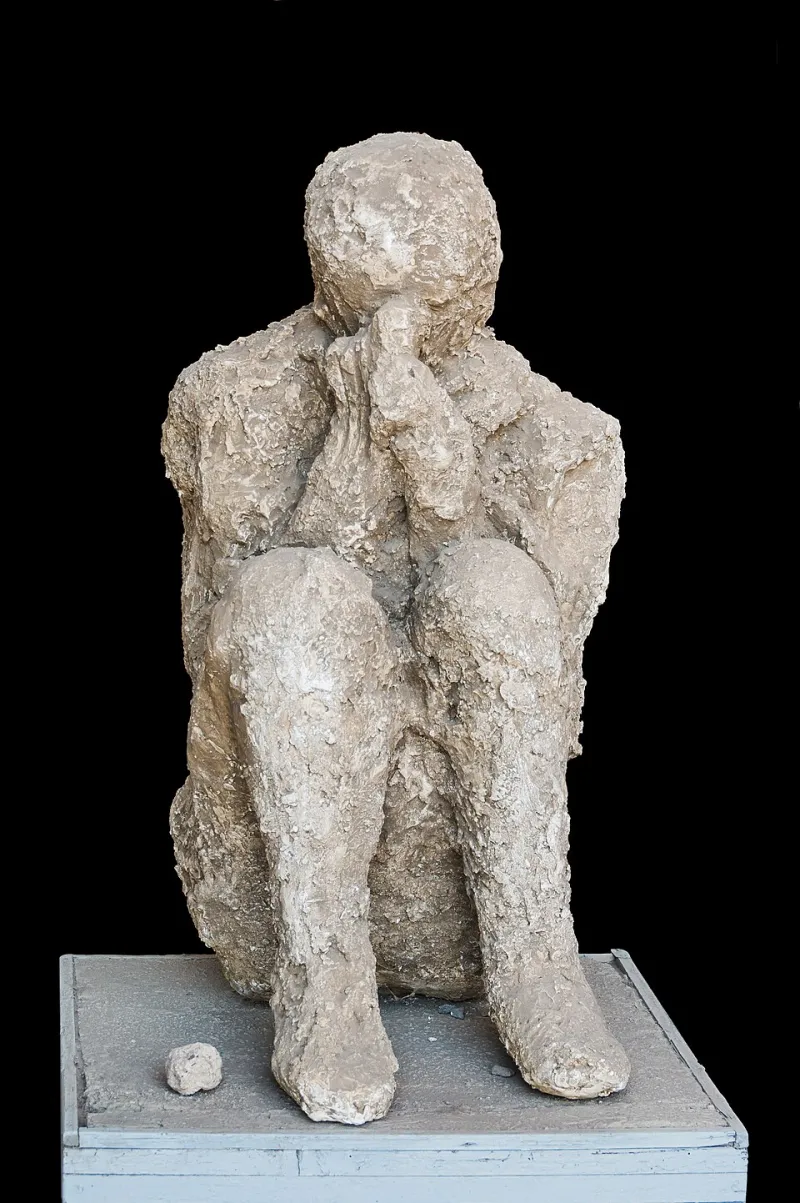
Photo: Jebulon, CC0, via Wikimedia Commons
If you went to school in the United States, someone told you to sit up straight. Probably more than once. Maybe a teacher tapped your shoulder when you slumped over a desk. Maybe a parent reminded you at the dinner table. The message was consistent: slouching is bad for your back, and a straight, upright spine is the healthy default.
Spine researchers have been quietly complicating that picture for years. The idea that rigid upright posture protects your back turns out to be significantly more nuanced than the version taught in American classrooms — and in some ways, the conventional wisdom points people in exactly the wrong direction.
Where the Straight-Back Obsession Came From
The cultural fixation on upright posture in the United States has roots in military bearing standards that predate modern ergonomics by over a century. Military training in the 19th and early 20th centuries treated an erect spine as both a physical and moral virtue — the visible sign of discipline and physical readiness. That framework filtered into schools through physical education programs that borrowed heavily from military training models, particularly after World War I and World War II, when fitness programs became part of mainstream American education.
By mid-century, the straight-spine prescription was standard classroom doctrine. Desks were designed around it. Posture was evaluated as part of physical education assessments in many school districts. The message was reinforced so consistently and over such a long period that it became one of those things Americans simply accept as common sense — the kind of thing that feels too obvious to question.
The problem is that it was never really grounded in clinical evidence. It was grounded in aesthetics and military culture, and the two got conflated.
What the Research Actually Found
In 2006, a team of researchers at Woodend Hospital in Aberdeen, Scotland used magnetic resonance imaging to study spinal disc movement in people sitting in three different positions: a slumped forward position, a fully upright 90-degree position, and a relaxed recline at roughly 135 degrees. The results surprised a lot of people outside the research community, even though they were consistent with what spine specialists had been observing for years.
 Photo: Woodend Hospital, via s3-media3.fl.yelpcdn.com
The fully upright position — the one Americans are trained to aim for — produced more spinal disc stress than the slight recline. The 135-degree position showed the least disc compression and the most even distribution of pressure across the lumbar region. The study suggested that what we call "good posture" may actually create more sustained muscle tension and disc load than a more relaxed backward lean.
That finding isn't an isolated outlier. Orthopedic and ergonomic research has consistently moved away from the rigid-upright model over the past few decades. The current consensus in sports medicine and physical therapy is less about achieving a fixed position and more about reducing static load — meaning, not staying in any single posture for extended periods, regardless of how "correct" it looks.
The Movement Problem Nobody Talks About
One of the clearest things the research points to is that the real threat to back health isn't slouching — it's stillness. Holding any position without moving puts sustained pressure on spinal discs, tightens supporting muscles, and reduces circulation to soft tissue. Whether you're sitting ramrod straight or curled over a phone, staying in one position for hours is where the damage accumulates.
This is why so much of the current guidance from physical therapists and ergonomists focuses on movement frequency rather than posture perfection. Standing desks became popular partly because of this — not because standing is inherently better than sitting, but because alternating between positions reduces the static load on the spine. Taking short breaks to walk around, shifting positions throughout the day, and building core strength through regular exercise all show more consistent benefits in the research than trying to maintain a specific spinal angle.
The American physical therapy community has largely shifted toward what's sometimes called "dynamic sitting" — the idea that small, frequent adjustments throughout the day are more protective than holding a fixed "correct" position. Lumbar support in chairs is designed not to enforce rigidity but to allow the lower back to maintain its natural inward curve without muscle effort, reducing fatigue over long sitting sessions.
What Actually Helps Your Back
None of this means posture is irrelevant. Extreme, sustained slouching — particularly the head-forward position that comes with staring at a phone or laptop for hours — does create real strain on the cervical spine and upper back muscles. The point isn't that posture doesn't matter at all, but that the simplified "sit up straight" rule doesn't capture what actually protects the spine.
What the evidence does support: regular movement throughout the day, strengthening the core and posterior chain muscles that support the spine, using seating that allows for natural lumbar curvature, and avoiding prolonged static postures of any kind. If you work at a desk, getting up and moving for even a few minutes every hour makes a measurable difference.
The Real Takeaway
The straight-spine rule felt like health advice, but it was really a cultural inheritance from military bearing standards that got absorbed into American education and never seriously questioned. Modern spine research doesn't endorse the rigid upright position as the gold standard — it suggests that movement, muscle support, and positional variety matter far more than achieving a specific angle.
So the next time you catch yourself feeling guilty about a slight recline, it's worth knowing that the guilt was trained into you by gym teachers following a tradition, not by orthopedic scientists following data.