Blue Light Filters on Your Phone Won't Fix Your Sleep — You're Solving the Wrong Problem
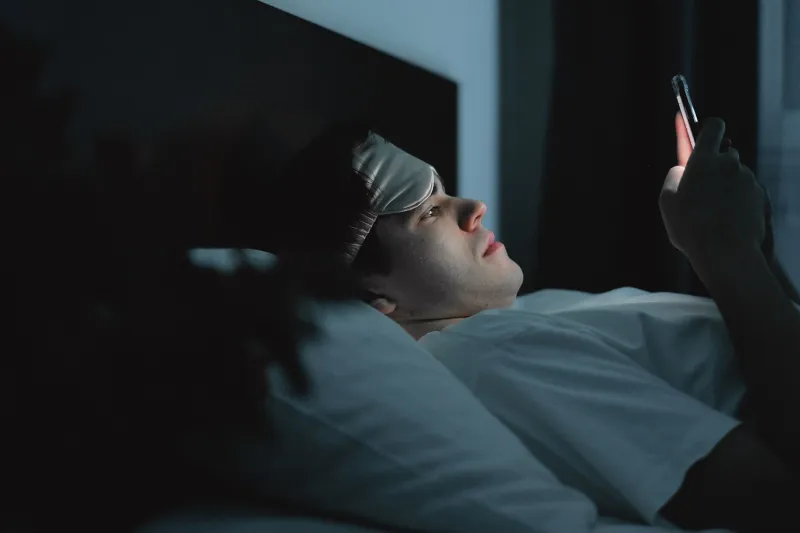
If you've owned a smartphone in the last eight years, someone has probably told you to turn on Night Shift, enable the warm-tone display filter, or stop looking at your screen an hour before bed — all in the name of protecting your sleep from blue light. It's become one of the most repeated pieces of tech-health advice in modern life, the kind of thing that gets shared in parenting groups, mentioned by doctors almost in passing, and built directly into every major phone operating system.
The blue light explanation is tidy, it sounds physiologically credible, and it gave manufacturers a feature to sell. There's just a problem: the research behind it is considerably weaker than the cultural confidence in it would suggest — and the thing that's actually disrupting your sleep barely gets mentioned.
The Science That Started It All
The blue light story has a real foundation. Light on the blue end of the visible spectrum — wavelengths around 480 nanometers — does influence the body's production of melatonin, the hormone that signals to your brain that it's time to sleep. Studies going back to the early 2000s established that exposure to blue-wavelength light in the evening can delay melatonin onset. That's legitimate science, and it's not in dispute.
The leap that followed — that the blue light from your phone screen is meaningfully suppressing your melatonin and ruining your sleep — is where the evidence gets shaky.
Phone screens emit blue light, yes. But the intensity is dramatically lower than the blue light exposure you get from, say, a well-lit room, an overhead fluorescent light, or the sky on a cloudy afternoon. A 2021 study published in the journal Sleep Medicine found that the blue light emitted by typical phone screens at normal nighttime brightness levels was unlikely to cause significant melatonin suppression on its own. Other researchers have noted that the real-world conditions under which phone light becomes a meaningful physiological problem — sustained, close-range exposure at high brightness in an otherwise dark room — don't describe how most people actually use their phones.
And when researchers have tested blue light filters directly? The results have been underwhelming. A well-cited 2021 randomized controlled trial from the University of Manchester found that switching to a warmer-toned display did not improve sleep outcomes in participants. The filter changed the light. The sleep didn't change.
The Feature That Sold an Explanation
Apple launched Night Shift in 2016, and Google followed with a similar feature shortly after. Both were marketed on the premise that warmer display tones would help users sleep better by reducing blue light exposure. The timing mattered: sleep anxiety was rising as a cultural topic, and the blue light story provided both a diagnosis and a solution that lived neatly inside the product itself.
This is worth sitting with for a moment. The companies that make the devices people use late at night developed a feature that addressed a specific scientific concern — while leaving the behavioral pattern completely untouched. You could keep scrolling until midnight, and the feature would quietly reassure you that you were managing your sleep health.
Blue light filter glasses followed the same arc. The market for "computer glasses" grew into a multi-hundred-million-dollar industry, largely on the back of claims that have not held up consistently in clinical testing. The American Academy of Ophthalmology has stated it does not recommend blue light glasses for sleep improvement, citing a lack of supporting evidence.
What's Actually Keeping You Awake
Sleep scientists who study phone use and sleep have been pointing at a different mechanism for years — one that's less marketable but considerably better supported by evidence.
The issue isn't primarily photons. It's engagement.
Checking your phone before bed activates the brain's reward circuitry. Notifications, social media feeds, news updates, and messaging apps are all designed — quite deliberately — to trigger dopamine responses. The brain interprets incoming information as potentially rewarding, which produces a state of alertness and anticipatory arousal. This is the opposite of what you need to fall asleep.
Beyond the neurological engagement cycle, there's the simple psychological reality of cognitive and emotional stimulation. Reading something upsetting in the news, getting into a text exchange that requires a response, or watching a video that triggers strong emotion — all of these activate your nervous system in ways that make sleep onset harder. Your brain doesn't care what color the light was.
Research from the National Sleep Foundation and various academic sleep labs has consistently found that the content and behavioral patterns of phone use correlate more strongly with sleep disruption than screen brightness or light temperature. How long you use the phone, what you're doing on it, and how close to sleep you stop using it all matter more than whether your display is running warm or cool.
Why the Blue Light Story Won Anyway
Simple, visual explanations beat complicated behavioral ones every time. "Blue light suppresses melatonin" is a clean causal chain that feels scientific and actionable. "The engagement loop your phone creates is keeping your nervous system in a state of alert arousal" is harder to put on a product box.
The blue light framing also lets everyone off the hook a little. If the problem is a wavelength of light, the solution is a filter — a passive fix that requires no behavior change. If the problem is that you're emotionally activated by a device that's been engineered to hold your attention, the solution is to stop using the device, which is harder and less satisfying to hear.
What Actually Helps
Sleep researchers point to a few interventions that have more consistent support. Stopping phone use 30 to 60 minutes before sleep — not filtering it, but actually stopping — gives the nervous system time to downregulate. Keeping the phone out of the bedroom removes the temptation to check it during the night, which fragments sleep even when people don't fully wake up. Managing the type of content consumed in the evening matters; passive, low-stakes content is less disruptive than emotionally charged material.
The blue light filter isn't doing nothing. It might make the screen more comfortable to look at in a dark room. But if you're using it as your sleep hygiene strategy, you've bought a solution to a problem that wasn't really the problem.