Goldfish Can Remember Things for Months — So Why Are We Still Telling That Three-Second Joke?
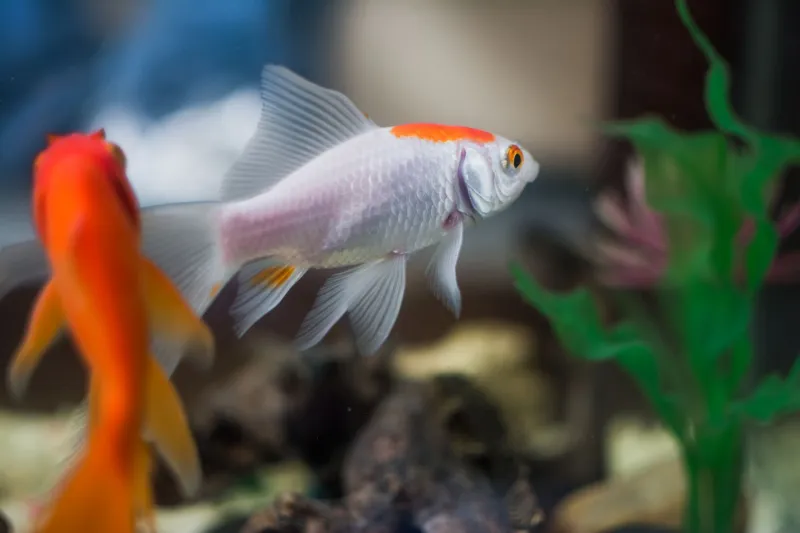
Ask almost any American how long a goldfish can remember something, and you'll get the same answer: three seconds. Maybe five if they're being generous. It's the kind of trivia that feels so obviously true that nobody bothers to check it. We've repeated it in classrooms, used it as a metaphor for forgetfulness, and built entire jokes around it.
There's just one problem. It's completely wrong — and scientists have been saying so for decades.
What the Research Actually Shows
Goldfish memory has been studied in controlled lab settings more times than you'd expect, and the results are consistently embarrassing for the three-second crowd. Researchers at the Technion Institute of Technology in Israel trained juvenile goldfish to associate a specific sound with feeding. After being released into a lake for several months, the fish were called back using the same sound — and they returned. That's not a three-second memory. That's months of retained association.
 Photo: Technion Institute of Technology, via c8.alamy.com
In separate university experiments, goldfish were trained to push a lever to receive food at specific times of day. They learned the schedule. They showed up on time. Some studies have demonstrated memory retention lasting up to five months under consistent conditions.
Australian high school students — working on a science fair project, not even a formal research study — trained their goldfish to navigate a simple maze. After weeks away from the maze, the fish completed it faster the second time around, showing clear evidence of retained spatial memory.
None of this is cutting-edge neuroscience. It's been sitting in the literature for years. And yet the three-second myth keeps circulating like it's settled fact.
Where Did the Three-Second Figure Even Come From?
Here's the frustrating part: nobody really knows.
Science historians and myth researchers have gone looking for the origin of the three-second claim, and they keep coming up empty. There's no landmark study. No famous scientist associated with the figure. No moment where someone measured goldfish recall and landed on exactly three seconds.
The best guess most researchers offer is that the myth evolved from a vague, intuitive assumption — goldfish are small, their brains are tiny, therefore they must be forgetful. It fits neatly into how people think about animal intelligence: size equals capacity. Small creature, small brain, small memory. It feels logical even though brain size is a notoriously unreliable proxy for cognitive ability.
From there, repetition did the rest. Someone said it confidently, it got a laugh, it became a go-to example of nature's limitations, and eventually it was treated as common knowledge. No citation required.
Why Myths Stick When They Feel Intuitively Right
The goldfish myth is a perfect case study in how false information survives not because it's convincing on paper, but because it's satisfying. It confirms something we already half-believed. Of course goldfish don't remember things — look at them, swimming in circles, bumping into the glass. They seem oblivious.
Psychologists call this confirmation bias at the cultural level. When a claim matches our existing mental model of the world, we absorb it without demanding evidence. When it contradicts our model, we push back and ask for proof. Goldfish-as-forgetful-creatures fits so comfortably into our hierarchy of animal intelligence that we never stopped to verify it.
There's also a social component. Repeating the three-second fact makes you sound like you know a quirky thing about the world. It's the kind of trivia that earns a nod at a dinner party. Correcting it, on the other hand, makes you the person who killed a perfectly good joke. The social incentive structure actively rewards keeping the myth alive.
What Goldfish Actually Experience
Goldfish are not geniuses. That's worth saying clearly. They have relatively simple nervous systems, and nobody is arguing they can solve crossword puzzles or hold grudges. But "not genius" and "three-second memory" are very different claims.
What research suggests is that goldfish are capable of associative learning — connecting a stimulus to an outcome and remembering that connection over time. They can be conditioned to respond to specific sounds, colors, and shapes. They can learn routes through physical environments. They demonstrate preference and recognition behaviors that require more than a few seconds of recall.
In practical terms, a goldfish in a home tank almost certainly recognizes its owner's approach to the glass. The shadow, the shape, the vibration of footsteps — these are associated with feeding, and the fish responds accordingly. That's not instinct. That's learned behavior.
The Takeaway
The three-second goldfish memory isn't just wrong — it's embarrassingly wrong given how thoroughly it's been tested. The fact that it's still floating around in casual conversation, school presentations, and internet memes says less about goldfish cognition and more about how myths survive when they feel true enough to repeat.
Next time someone drops the three-second line, you've got the real story. Goldfish remember plenty. We're the ones who forgot to check.