Those Dates Printed on Your Food Aren't FDA Safety Standards — They're the Manufacturer's Best Guess About Freshness
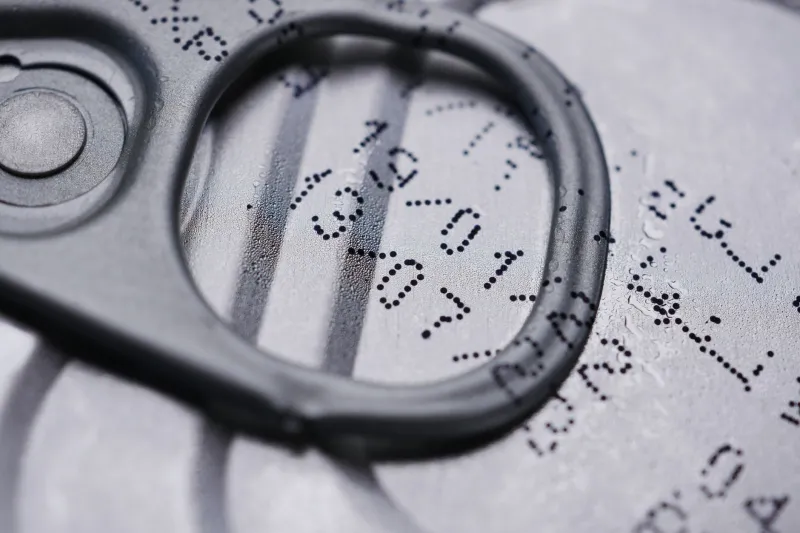
You open the fridge, grab the Greek yogurt, flip it over, and check the date. It says the 14th. Today is the 16th. You pause for a half-second — then throw it out. Maybe you feel a little wasteful. But better safe than sorry, right?
This scene plays out millions of times a day across American kitchens. And the decision-making behind it rests on an assumption that almost nobody stops to verify: that the date on the package is a federally regulated safety threshold, set by scientists, backed by the FDA, and meaningful in a consistent way across products.
It isn't any of those things.
A System Built Without Federal Standards
Here is the part that tends to genuinely surprise people: with the exception of infant formula, the federal government does not regulate food expiration dates. The FDA does not set them. The USDA does not mandate them for most products. There is no federal law requiring that most packaged foods carry a date label at all.
What exists instead is a patchwork of state laws — roughly 20 states have some form of date labeling requirement, each with different rules, different definitions, and different enforcement. The dates you see on packaging are almost entirely determined by manufacturers, using their own internal quality assessments, marketing considerations, and liability instincts.
The result is a system that looks authoritative and uniform but is neither.
What Those Labels Actually Mean — And Don't Mean
The terminology alone signals the problem. Walk through any grocery store and you'll find at least three different types of date labels, often used interchangeably and applied inconsistently:
"Sell By" is primarily a message to the retailer, not the consumer. It tells the store how long to display the product for sale. Food is typically still perfectly safe to eat for days or weeks after a sell-by date, depending on the product and how it's been stored. Throwing food away because it passed the sell-by date is, in most cases, discarding food that has nothing wrong with it.
"Best By" or "Best If Used By" is a quality indicator, not a safety indicator. It reflects the manufacturer's estimate of when the product will be at peak flavor, texture, or appearance. After this date, a cracker might be slightly less crisp. A can of soup might taste marginally different. Neither of these is a health risk.
"Use By" is the closest thing to a safety-relevant date, and even here the picture is complicated. For highly perishable products like fresh meat or some dairy, a use-by date has more practical relevance. But for shelf-stable products, a use-by date is still largely a quality estimate.
The Food Safety and Inspection Service — the USDA division that oversees meat and poultry — explicitly states on its website that "use by" dates are about quality, not safety. Even they acknowledge that food can be safe well past the printed date if it's been stored properly.
How the Confusion Was Built
Date labels started appearing on American food products in the 1970s, partly in response to consumer advocacy for more transparency and partly because manufacturers recognized that freshness dating could actually drive sales. If a product has a date on it, consumers perceive it as fresher and more carefully produced. Date labels became a marketing feature that also happened to feel like a safety feature.
Over time, the labels multiplied, the terminology diverged, and the absence of any standardizing federal framework meant that a "best by" date on a bag of chips and a "use by" date on a package of deli meat could be generated through completely different processes with completely different implications — but they looked equivalent to consumers.
The food waste consequences have been significant. The Natural Resources Defense Council has estimated that date label confusion is a leading contributor to the approximately one-third of all food produced in the United States that goes uneaten. The economic loss runs into the hundreds of billions of dollars annually. Food banks report turning away donations because of date labels that have no regulatory meaning.
What Other Countries Do Differently
This isn't a universal approach. The European Union requires a clearer distinction between "use by" (safety-relevant, mandatory for highly perishable foods) and "best before" (quality indicator). The UK has run public campaigns specifically educating consumers that "best before" is about quality, not safety, and that most products are fine after that date.
Australia and New Zealand have similar tiered systems with clearer regulatory definitions. In many countries, shelf-stable products — canned goods, dried pasta, crackers — carry "best before" dates that consumers understand as guidelines rather than deadlines.
The American system, by contrast, leaves interpretation almost entirely to the consumer, who has been given no reliable framework for what any of the labels actually mean.
How to Actually Tell If Food Has Gone Bad
Food scientists and consumer safety experts generally point to the same practical toolkit: your senses. Smell, appearance, and texture are more reliable indicators of spoilage than a printed date for most products.
Mold is visible. Spoiled meat smells unmistakably wrong. Dairy that has turned will tell you. Canned goods with bulging lids or damaged seals are a genuine concern regardless of any date. These are real signals. A date printed by a marketing department is not.
For genuinely perishable items — raw poultry, ground meat, fresh fish — err toward caution and use or freeze them within a few days of purchase regardless of dates. For shelf-stable products, the date is almost entirely irrelevant to safety.
The Takeaway
The dates on your food packaging are not a federal safety net. They're a manufacturer's estimate, generated without regulatory oversight, printed in terminology that varies by company, and interpreted by consumers who reasonably but incorrectly assume they carry official weight.
The real story here isn't that expiration dates are useless — it's that the system was never designed with consumer clarity in mind, and nobody ever clearly explained what it was actually for. Billions of dollars of safe food goes into American trash cans every year because of a label that, in most cases, was printed to protect a brand's quality reputation, not your health.
Your nose knows more than the package does.